
Cucumber (Cucumis sativus L.) belongs to the family Cucurbitaceae (gourd family). It is an annual, monoecious (separate male and female flowers on the same plant), climbing or prostrate herbaceous vine with a taproot system, tendrils, palmately 3–5 lobed leaves, and yellow flowers. The chromosome number is 2n = 14 (unique in the genus Cucumis).
Origin: Cucumber originated in the Indian subcontinent, specifically the foothills of the Himalayas (including regions in India, Nepal, Bangladesh, and extending to parts of China and Northern Thailand). Wild, bitter-fruited forms (C. sativus var. hardwickii) are still found there. It has been cultivated for over 3,000 years and is one of the oldest vegetables. Nepal lies within the centre of origin and diversity.
Cucumber (Cucumis sativus L.) is one of Nepal’s most important warm-season vegetables. It is a fast-growing, climbing annual vine with tendrils, palmately lobed leaves, and yellow flowers. Nepal lies in the centre of origin (Himalayan foothills), where both cultivated and wild forms are found. The crop is highly profitable for smallholders due to short duration (45–70 days), high market demand, and suitability for both open-field and protected cultivation across Terai, mid-hills, and valleys up to 1,800 masl.
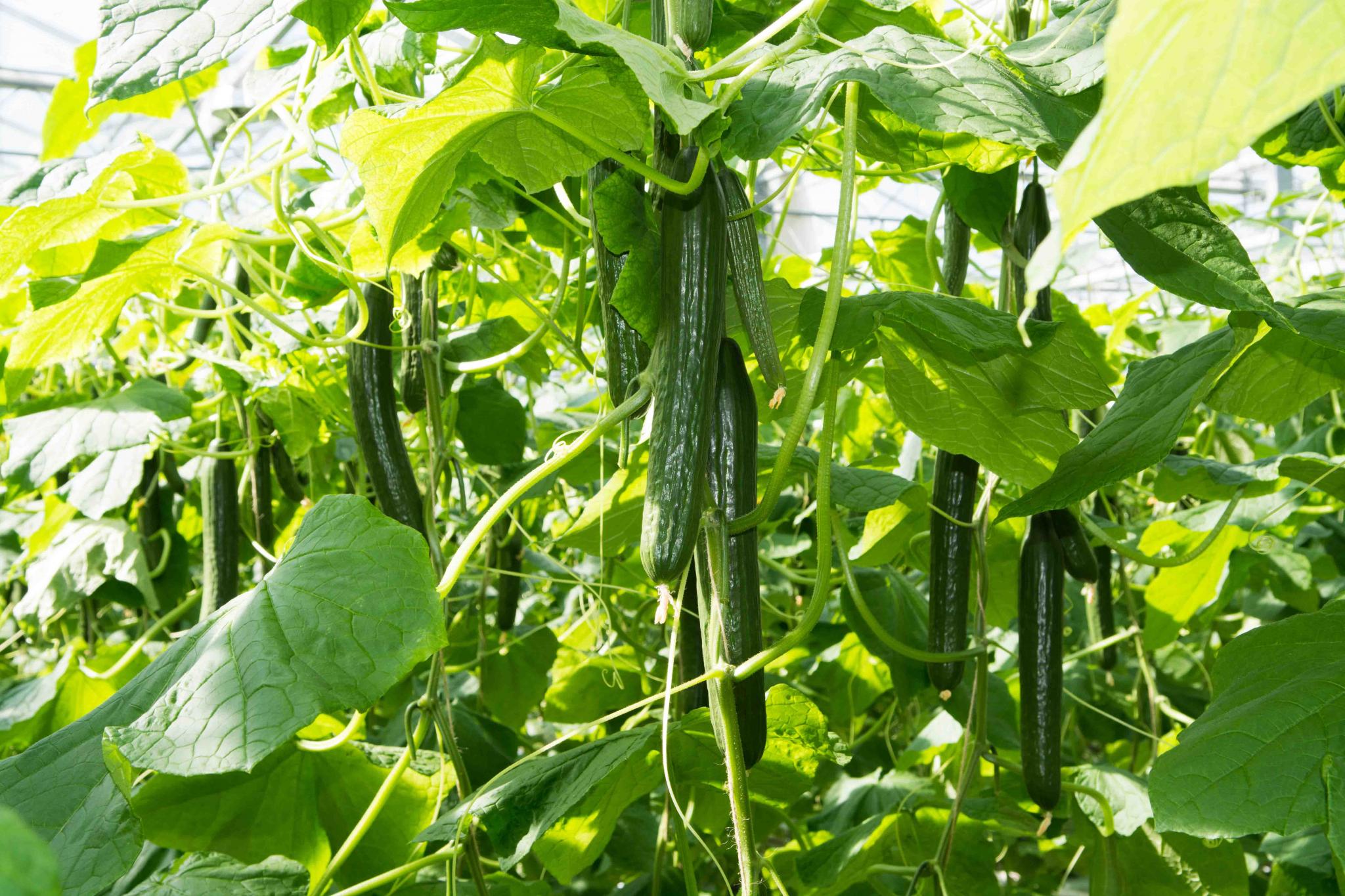
Climate Requirements Cucumber needs warm, humid conditions: day temperature 25–30°C, night 15–20°C, and soil temperature above 15°C for germination. It is highly sensitive to frost and waterlogging. In Nepal:
- Terai/plains: Sow February–April (main spring-summer crop).
- Mid-hills: Sow March–April.
- Off-season: Protected structures (polyhouse/tunnel) allow year-round production, especially October–February. Long days favour male flowers; short days and cooler nights increase female flowers and fruit set. High humidity helps but increases disease risk in rainy season (June–August).
Soil Requirements Cucumbers prefer well-drained loamy soils rich in organic matter (pH 6.0–7.0, ideally 5.5–6.7). They tolerate a range from sandy loam to clay but perform best in light to medium soils that warm quickly for early crops. Heavy clay soils delay maturity and increase vine growth at the expense of fruits. Add 20–50 t/ha well-decomposed FYM (farmyard manure) to improve organic matter, which is often low in Nepali soils. Avoid saline or acidic soils (pH <5.5). In river basins (e.g., Kapilvastu, Chitwan) alluvial loams perform excellently. Low organic matter and nutrients are common constraints, so 20–50 cartloads/ha of well-decomposed FYM is standard.
Popular Varieties in Nepal
- Local: Bhaktapur Local (most common, long dark-green fruits, but lower yield and longer duration).
- Hybrids (recommended for commercial production): Dynasty, Ninja-179, Malini, LHC-1395, NS-408, Parvati, Garima, Sita 888, Juboraj 411, Rehmat-1080, and many others. Hybrids mature in 40–50 days, give gynoecious (mostly female) flowers, higher yield (25–40 t/ha under good management), and better fruit quality. Seeds are available from NARC, private companies, and agro-vets.
Land Preparation Plough the field 3–4 times to a fine tilth. Remove weeds and stubbles. Form raised beds (1–1.5 m wide, 15–20 cm high) with 1.5–2.5 m row-to-row spacing and 0.6–0.9 m plant-to-plant spacing. Incorporate basal FYM + full phosphorus and potassium + half nitrogen. Pre-irrigate before sowing. Plastic mulching is highly recommended as it conserves moisture, suppresses weeds, and raises soil temperature, increasing yield by 20–30%.
Sowing and Planting
- Seed rate: 3–4 kg/ha.
- Method: Direct sowing (2–3 seeds per hill, 3–5 cm deep) or nursery raising in polybags/cell trays (transplant at 20–25 days old, 2–3 true leaves).
- Season: February–April (open field); any time in polyhouse.
- Soak seeds in water for 12–24 hours for better germination (85–90%). Two plants per hill on bed edges. Thin to one vigorous plant per hill after 10–15 days.

Irrigation and Fertilization Cucumber is a shallow-rooted crop requiring frequent irrigation (every 2–4 days in summer). Critical stages: flowering and fruit development. Drip irrigation + mulching saves 40–50% water and gives uniform growth. Fertilizer dose (per hectare):
- FYM: 20–50 t
- NPK: 80–100 : 60–80 : 60–80 kg (full P & K + ½ N basal; remaining N in 2 splits at vining and flowering). Micronutrients (boron, zinc) may be needed in deficient soils. Foliar sprays of micronutrients improve fruit quality.
Intercultural Operations
- Weeding: 2–3 manual weedings at 10, 20, and 30 days after sowing. Pre-emergence herbicides (e.g., pendimethalin) can be used carefully.
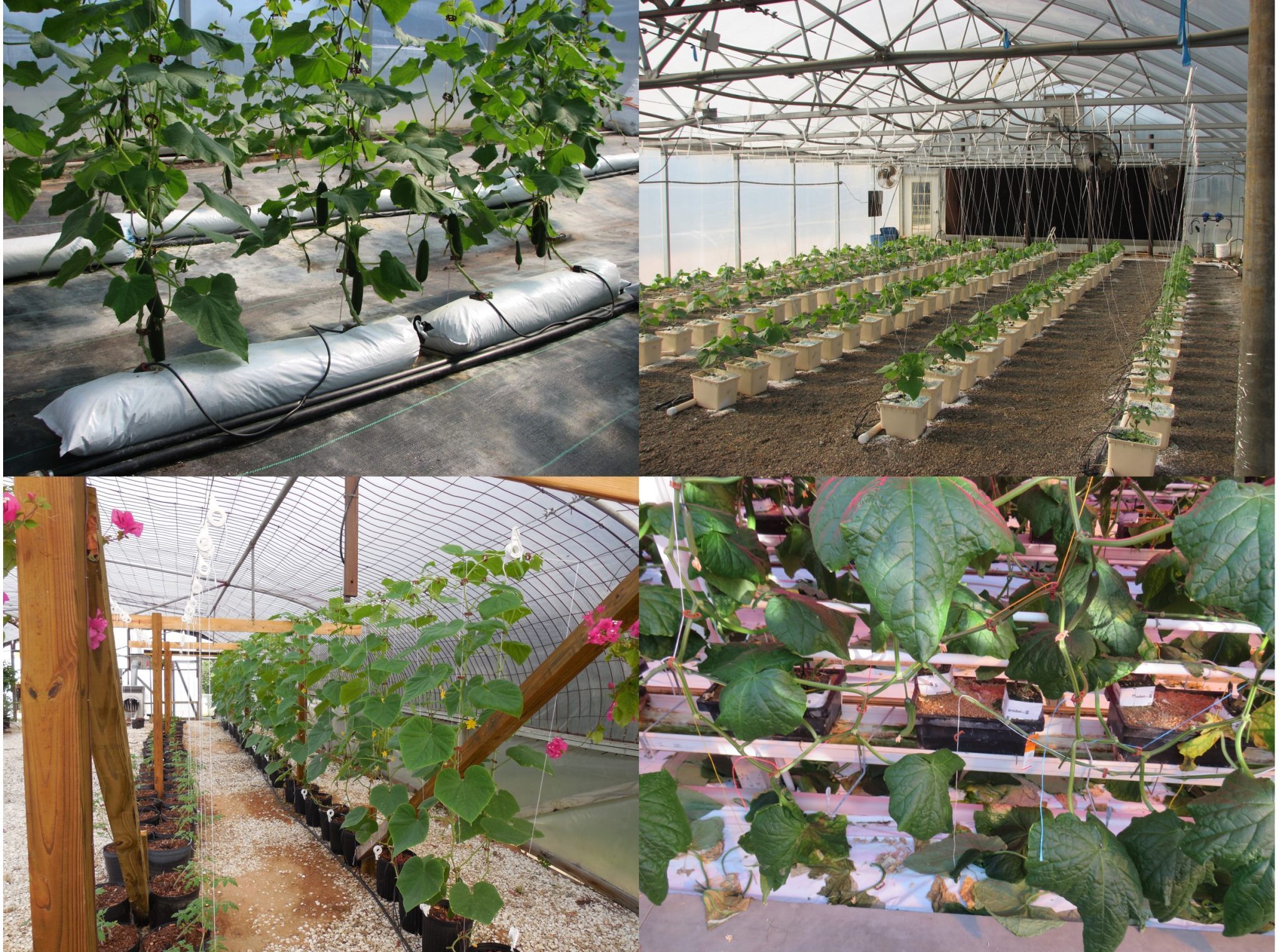
- Training & Pruning: Essential for higher yield. Use bamboo/iron trellis or vertical strings in polyhouse. Train to single stem or use “3G cutting” (prune tips of 1st, 2nd, and 3rd generation branches) to increase female flower ratio. Pinch main stem at 1.5–2 m height in open field.
- Earthing-up: Done when vines spread to prevent lodging.
- Pollination: Bees are the main pollinators; hand-pollination or bee hives help in polyhouse.

Protected Cultivation (Polyhouse/Tunnel) For off-season and higher income, polyhouse with drip + mulching is widely adopted in Kathmandu valley, Kavre, Dhading, and Surkhet. Yield can reach 30–50 t/ha. Partial shading or ventilation is needed in peak summer. B:C ratio is often 2.5–3.5:1 in protected structures.
Pest and Disease Management (IPM) Major pests:
- Pumpkin fruit fly (most damaging – maggots inside fruit).
- Red pumpkin beetle, aphids, whitefly, thrips. Major diseases: Powdery mildew, downy mildew, viral diseases (mosaic), bacterial wilt. Management:
- Sanitation, crop rotation, yellow sticky traps, pheromone traps.
- Neem oil, cow urine + ash, or botanical extracts.
- Chemical sprays only when necessary (e.g., cypermethrin, chlorpyrifos for fruit fly; fungicides for mildew).
- Resistant hybrids reduce chemical use.

Harvesting and Post-Harvest Harvest starts 40–50 days after sowing when fruits are tender (15–25 cm long, bright green, before seeds harden). Pick every 2–3 days to encourage continuous fruiting. Use sharp knife/scissors; avoid twisting. Grade by size and quality. Pack in crates or baskets. Store at 10–12°C and 90–95% RH for 7–10 days. In Nepal, most produce goes to local markets (Kathmandu, Pokhara, Biratnagar) or India. Off-season fruits fetch 2–3 times higher price (Rs 50–150/kg farmgate).
Production and Economics in Nepal
- Area: ~10,000–11,000 ha
- Production: ~1.5–1.6 lakh MT
- Average productivity: 15–16 t/ha (open field); 25–40 t/ha (hybrids + polyhouse). Cucumber is a high-value cash crop. Gross return can exceed NRs 2–4 million/ha under protected cultivation with good management. Constraints: fruit fly, price fluctuation, middlemen, and lack of irrigation in hills.
Consumption Consumed fresh in salads, raita, or as pickles. It is 95–96% water, low-calorie (15 kcal/100 g), rich in vitamin K, vitamin C, potassium, and antioxidants. Acts as a natural coolant, helps digestion, and is popular in summer across Nepal.
Key Recommendations for Nepali Farmers
- Switch to hybrids (Dynasty, Malini, LHC series) for 50–100% higher yield.
- Adopt drip + plastic mulch + trellis system.
- Use polyhouse for off-season production near cities.
- Follow IPM to reduce pesticide residue.
- Contact local Agriculture Knowledge Centre or NARC for latest seeds and training.

0 Comments